
CI/CD Explained: How Modern Applications Are Deployed

Doris Infotech
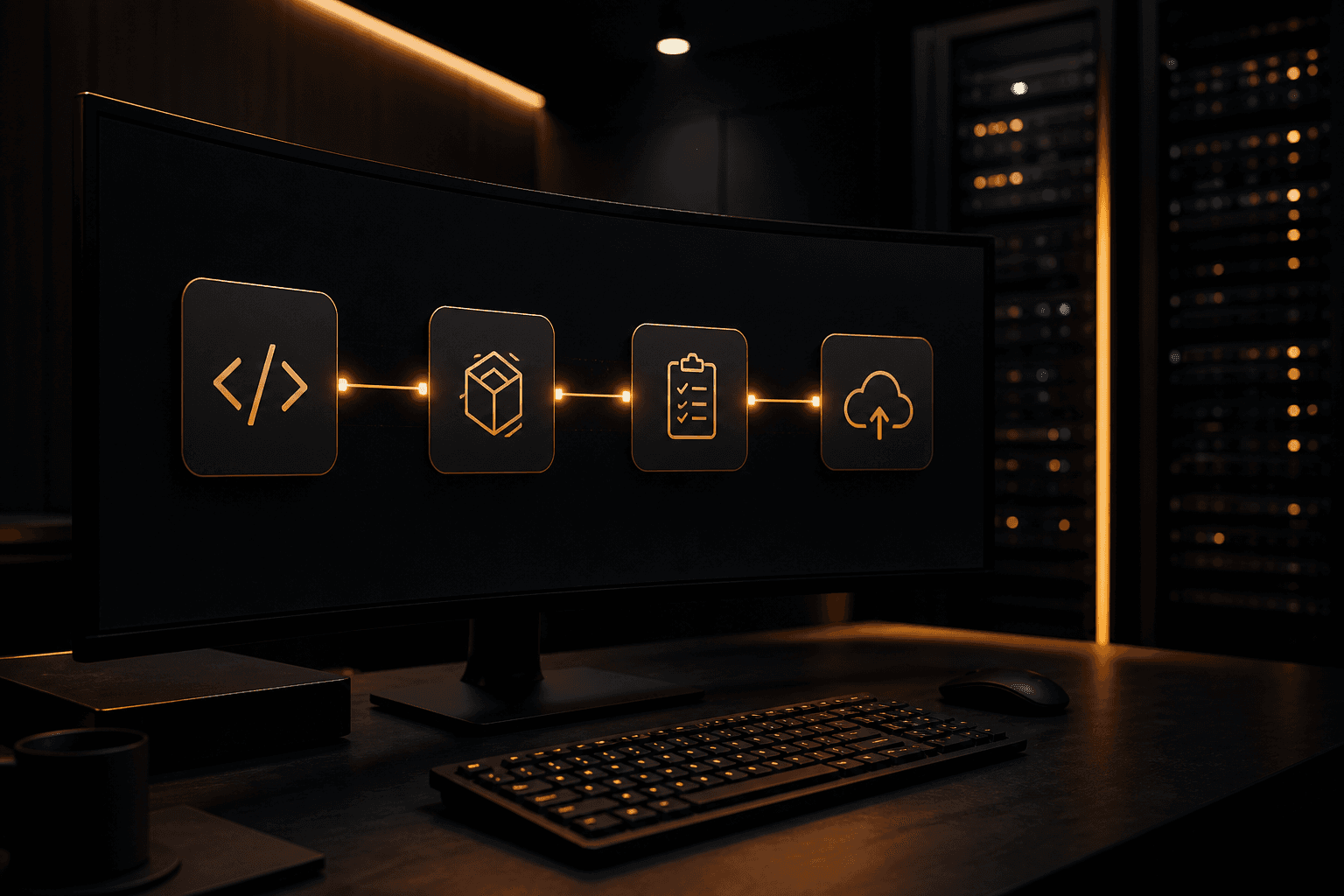
Deployment used to mean a person, a weekend, and a checklist that lived in someone’s head. Someone merged late. Someone forgot a config. Someone overwrote production. The app went live when a person said it did.
CI/CD - continuous integration and continuous delivery (or deployment) - replaces that ritual with a repeatable path. Code is merged often. A machine builds it. Tests run. If the checks pass, the same machine can put the build on staging or production. The release is a process, not a hero moment.
At Doris Infotech we treat the pipeline as part of the product. A feature that cannot be built, tested, and released the same way twice is not finished. CI/CD is how modern applications actually get to users.
Continuous integration is the first gate
CI means every change joins the main line often, and a build proves it still works with everyone else’s work. Lint, unit tests, and a real compile happen on the server, not only on one laptop. If the build is red, the change does not move forward. Integration debt is cheaper on day one than in a three-month branch that nobody can merge.
Continuous delivery (or deployment) is the second gate
CD takes a green build and makes it releasable. Delivery means you always have an artifact you could ship. Deployment means the pipeline can put that artifact live - often behind a flag, a canary, or an approval. The important part is the same: the steps are scripted. Environments are not snowflakes. Staging should resemble production enough that a pass there means something.
What a modern deploy actually looks like
A developer opens a pull request. Checks run. Review happens. Merge triggers a job: install, build, test, package, push an image or bundle, then update the host - a PaaS, a container cluster, a static CDN, or a VM. Health checks and a rollback path sit next to the go-live step. Users see a new version because the pipeline finished, not because someone FTP’d a folder.
Why this is safer than “just upload it”
Humans skip steps when they are tired. Pipelines do not. Secrets stay in the platform, not in a chat. The same tests that ran on the branch run again before release. You get a log of what shipped and who approved it. When something breaks, you roll back the last artifact instead of reconstructing a laptop from memory.
Start small, then make it boring
You do not need a perfect cluster on day one. You need a build that fails when tests fail, and a deploy that a second person could run without a walkthrough. Add staging, then production, then approvals where the business needs them. Doris Infotech would rather a simple pipeline that ships every week than a diagram that never goes live. Boring deploys are the goal.