
SQL vs NoSQL: Understanding the Difference

Doris Infotech
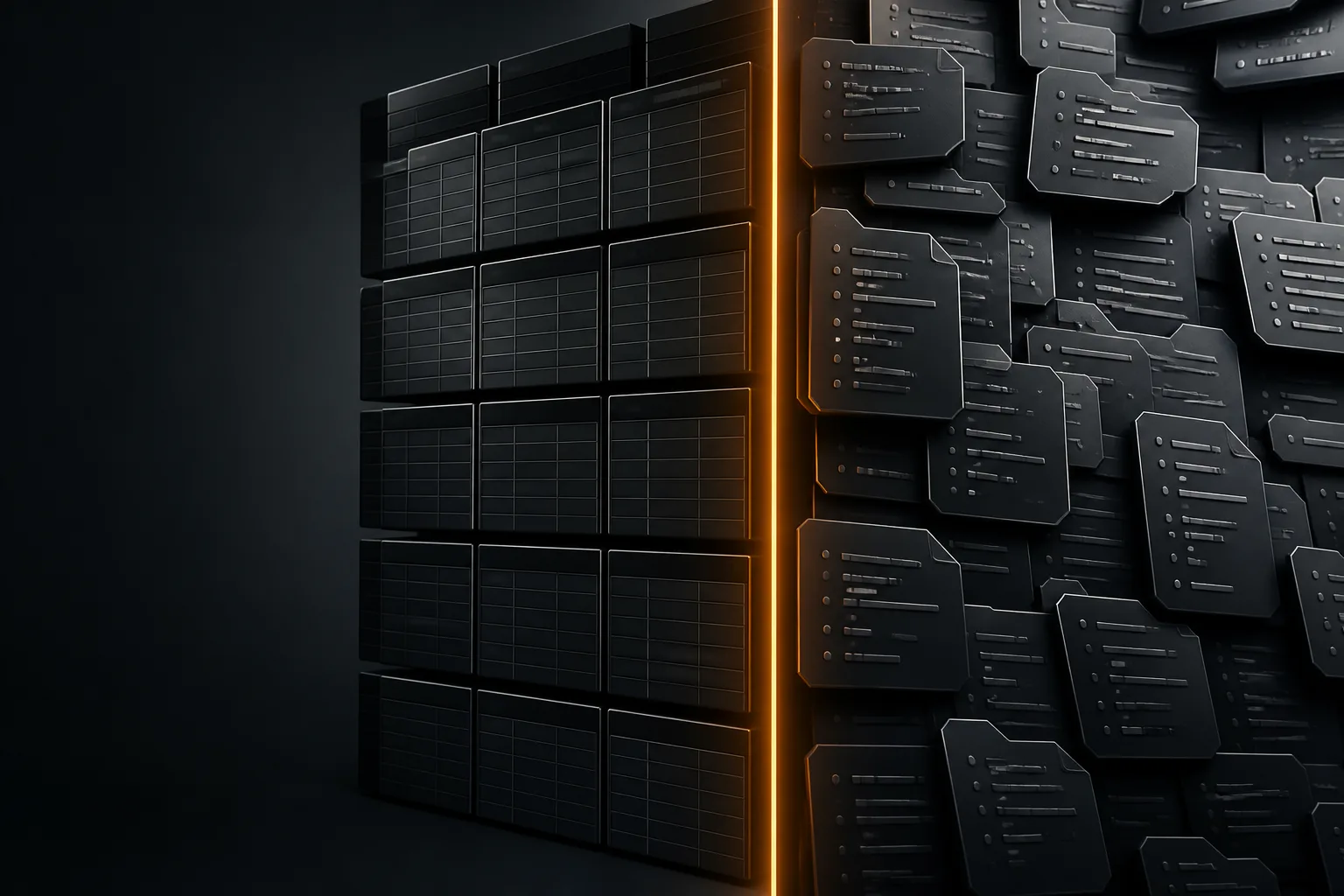
SQL versus NoSQL is often sold as old versus new. That framing hides the real split: how data is shaped, how it is queried, and what the database guarantees when two writes happen at once. PostgreSQL, MySQL, and SQL Server sit on one side of that split. MongoDB, DynamoDB, Redis, and Cassandra sit on several other sides - NoSQL is not one thing.
At Doris Infotech we explain the difference in product language. If you need a single answer that stays true across tables, you want a relational engine and SQL. If you need to store a document as it arrived, or a cache keyed by id, a NoSQL store may be the simpler tool.
Most serious products use more than one. The mistake is treating one category as a personality trait for the whole company.
SQL: schema, joins, and a shared language
In a SQL database, you declare tables, types, and relationships. The engine can join, constrain, and aggregate with a language almost every engineer has seen. Transactions make a group of writes succeed or fail together. That model fits billing, inventory, HR, and any domain where “this row refers to that row” is the product.
NoSQL: documents, keys, and fewer joins
Document stores keep nested JSON together so one read can load a whole screen. Key-value stores are fast maps. Wide-column and graph stores solve other shapes. You trade joins and rigid schema for flexibility and, often, simpler horizontal scaling for a specific access pattern. You also take on more validation in the application.
Consistency is a product decision
Relational SQL systems usually give you strong consistency in a single database: after a commit, the next read sees it. Many NoSQL systems let you choose eventual consistency for availability or scale. That is fine for a like count. It is not fine for a wallet balance unless you designed for it. Ask what would happen if two users wrote at the same time.
Query power versus write simplicity
SQL is strong when the question changes: new filters, new reports, new joins. NoSQL is strong when the question is stable: get this document, put this key. If you cannot name the queries, a flexible document dump will not save you - it will postpone the model until production. If you can name them, pick the engine that makes those queries cheap.
Use both without mixing the story
A typical stack we ship: PostgreSQL as the system of record, Redis for sessions or rate limits, maybe a document store for a catalog with messy attributes. Each store has a job. Duplicate data only with a clear owner and a sync path. Understanding SQL vs NoSQL is less about a winner and more about not asking one database to be all of them.